By midafternoon in South Florida, a masonry wall can hold enough heat to make the exterior feel untouchable. Add daily UV exposure, wind-driven rain, humidity, and salt air near the coast, and ordinary paint is often asked to do more than it was designed to handle. A protective coating for masonry homes is a different kind of investment: one intended to defend the building envelope, preserve curb appeal, and reduce the cycle of frequent exterior repainting.
For homeowners who are tired of faded color, chalking surfaces, hairline cracks, and mounting maintenance costs, the question is not simply which paint color to choose. It is whether the exterior system on the home is built for Florida.
What a Protective Coating Does for Masonry Homes
Masonry includes stucco, concrete block, brick, and other cement-based exterior surfaces. These materials are durable, but they are not immune to moisture intrusion, thermal movement, surface cracking, or ultraviolet degradation. The coating applied over them has a major effect on how well the exterior performs over time.
A high-performance masonry coating creates a protective finish that is designed to resist weathering while maintaining a finished appearance. Unlike a basic repaint, a quality coating system is selected and applied with the condition of the substrate, the home’s exposure, and the local climate in mind.
For South Florida homes, heat reflectivity is especially valuable. Advanced exterior coatings such as TEX•COTE® COOLWALL® are formulated to reflect more of the sun’s heat than conventional exterior paint. That can help lower exterior surface temperatures and reduce the heat load transferred into the home. The result may be a more comfortable property and less demand on the air-conditioning system during the hottest months.
The right system also helps defend against fading, peeling, moisture-related deterioration, and the tired appearance that can make an otherwise well-maintained home look overdue for attention.
Why Florida Masonry Needs More Than Standard Paint
Paint can be an appropriate choice for some homes, especially when a surface is in good condition and the homeowner is planning for a shorter-term update. But paint is generally a cosmetic finish first. In a demanding climate, it can fade, chalk, lose adhesion, and require repainting far sooner than homeowners expect.
A protective coating is designed for a longer view. It is not a shortcut or a product that can correct every structural concern, but when properly matched to a sound masonry surface, it can provide a more durable layer of defense.
Intense Sun Breaks Down Ordinary Finishes
Florida sun does not just fade bright colors. Over time, UV exposure can weaken conventional paint films, leading to dullness, chalking, and uneven color. Darker exterior colors can absorb substantial heat, placing even more stress on the coating and the wall beneath it.
Heat-reflective coating technology addresses this issue by reflecting a greater portion of solar energy. This is particularly meaningful on broad stucco walls with southern or western exposure, where sun can be relentless for much of the day.
Humidity and Rain Find Weak Points
Masonry is not waterproof simply because it is hard. Hairline cracks, failed caulking, porous stucco, and poorly prepared surfaces can allow water to enter areas where it does not belong. Once moisture becomes trapped, homeowners may see staining, blistering, mildew growth, or paint failure.
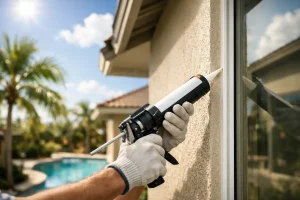
A professional coating project begins with evaluating these conditions rather than covering them up. Cracks should be addressed, damaged areas repaired, and surfaces properly cleaned and prepared before the coating is applied. The product matters, but surface preparation determines whether that product has a sound foundation.
Salt Air Adds Another Layer of Exposure
Homes near the coast face additional stress from airborne salt. Salt can accelerate deterioration on exterior components and leave deposits that interfere with adhesion if surfaces are not thoroughly cleaned. A contractor familiar with South Florida conditions understands that preparation standards cannot be reduced simply because a wall looks clean from the street.
Protective Coating for Masonry Homes vs. Exterior Paint
The distinction comes down to purpose, performance, and expected service life. Conventional exterior paint is commonly chosen for a lower initial cost and a quick refresh. A premium coating system is chosen by homeowners who want to reduce maintenance pressure and protect the exterior over the long term.
That does not mean every masonry home needs a premium coating. If you expect to sell shortly, have extensive unresolved substrate damage, or simply want a temporary color update, paint may be the more practical option. But if you plan to remain in the home, face repeated fading or peeling, or want to improve heat management at the exterior walls, a protective coating deserves serious consideration.
The upfront investment is typically higher than a basic paint job. The value comes from what the system is intended to avoid: recurring repainting, premature color loss, ongoing weather damage, and the inconvenience of repeatedly preparing the home for another exterior project.
The Application Process Is Part of the Protection
No coating can outperform a rushed application. A lasting result requires a systematic approach that addresses the home as a complete exterior protection project, not just a painting appointment.
First, the masonry surface must be inspected for cracks, failed sealants, loose material, mildew, chalking, and prior coating failure. Cleaning removes contaminants that could compromise adhesion. Repairs and weatherproofing measures are completed before the protective finish is installed.
Next, the coating system is applied according to manufacturer specifications. Proper film build, coverage, curing conditions, and detailing around windows, doors, trim, and transitions all matter. These details help create a consistent protective barrier across the exterior.
This is why homeowners should look beyond a low estimate. Two proposals may both say “exterior painting,” yet one may include basic pressure washing and paint while the other includes substrate repairs, premium coating technology, certified application procedures, and warranty-backed coverage. Those are not equivalent scopes of work.
What to Look for in a Masonry Coating Contractor
A high-performance product should be installed by a team qualified to apply it. Ask whether the contractor is properly licensed, whether the crew has manufacturer training or factory certification, and how surface repairs are handled before coating begins.
You should also ask what is included in the written scope. The proposal should clearly identify preparation, crack treatment, caulking, coating materials, application process, and warranty terms. Vague language can create expensive misunderstandings once the project is underway.
For homeowners considering a heat-reflective system, ask how the coating is expected to perform on your specific elevations and colors. A reputable contractor will explain the benefits without promising that any coating can eliminate every cooling cost or repair underlying building defects. Performance depends on wall exposure, insulation, windows, roof condition, HVAC efficiency, and the home’s overall construction.
Tri-County Painters approaches exterior protection as a long-term home defense decision, using authorized TEX•COTE® COOLWALL® systems applied by trained professionals and supported by licensed contractor expertise.
When Is the Right Time to Coat a Masonry Exterior?
The best time is before cosmetic issues become larger repair issues. If your walls are fading, chalking, showing recurring mildew, or developing small cracks, an inspection can help determine whether the surface is still a good candidate for a protective coating system.
Waiting until paint has extensively peeled or moisture damage has spread can increase preparation and repair costs. Acting early gives homeowners more options and helps preserve the condition of the masonry beneath the finish.
A well-chosen coating does more than make a house look freshly painted. It can help the exterior stand up to the climate that challenges it every day. Before committing to another short-cycle repaint, have the walls evaluated for the protection, heat reflectivity, and long-term performance your home may actually need.