Salt does not have to land on your walls in visible white crystals to cause damage. In South Florida, airborne salt rides humid coastal air, settles on exterior surfaces, and holds moisture against your home. That is why choosing the best exterior finish for salt air is less about picking a paint color and more about building a lasting defense against sun, water, corrosion, mildew, and premature fading.
A standard exterior paint job may look sharp on day one. Near the coast, though, thin conventional paint films can break down faster than homeowners expect. The right finish should protect the substrate beneath it, maintain curb appeal through intense UV exposure, and reduce the cycle of scraping, patching, and repainting every few years.
Why Salt Air Is So Hard on Florida Exteriors
Salt air creates a problem because salt is hygroscopic – it attracts and retains moisture. When salt residue settles on stucco, concrete, trim, soffits, railings, and exterior metal, it can keep those materials damp longer after rain, dew, or a humid afternoon. That extended moisture exposure gives mildew a better environment and can accelerate corrosion on metal components.
South Florida homes also face a punishing combination of direct sun, wind-driven rain, high humidity, and sudden temperature changes. UV radiation fades ordinary paint pigments and weakens binders over time. Rain can find small cracks around windows, doors, rooflines, and penetrations. Once water enters behind a finish, peeling, staining, and substrate damage can follow.
The most expensive mistake is treating these conditions as a cosmetic issue. Exterior finish failure is often a warning that the protective layer is no longer doing its job. A long-term solution has to address surface preparation, coating thickness, adhesion, moisture management, and sun resistance together.
The Best Exterior Finish for Salt Air Is a High-Performance Coating System
For many coastal Florida homes, a premium elastomeric or advanced acrylic wall coating system is a stronger choice than basic house paint. These systems are engineered to create a thicker, more durable protective film over properly prepared stucco, masonry, and similar exterior surfaces.
The difference matters. Conventional paint is generally designed for color and short-term weather protection. A high-performance exterior coating is designed to bridge fine, non-structural surface cracks, resist wind-driven rain, tolerate expansion and contraction, and defend against fading under extreme UV exposure. It can also provide a more substantial barrier between salt-laden moisture and the wall surface.
TEX•COTE® COOLWALL® is one example of a premium exterior coating system built for this kind of climate. Its heat-reflective technology is designed to reflect a significant portion of the sun’s heat, helping lower exterior surface temperatures while providing long-term color retention and weather resistance. For homeowners who are tired of frequent repainting, that combination of protection and energy-conscious performance can make a coating system a better value than another ordinary paint job.
That does not mean every exterior needs the same product or approach. The best solution depends on the wall material, current coating condition, moisture exposure, proximity to the coast, architectural details, and whether cracking or previous paint failure is already present.
Look for These Performance Qualities
A finish suited for salt-air exposure should offer strong adhesion to the specific substrate, resistance to UV fading, moisture protection, and flexibility. It should also be compatible with any existing coatings after proper testing and preparation.
For coastal homes, a quality system should be more than a label that says “exterior paint.” Ask whether the product is designed for masonry or stucco, whether it provides an elastomeric protective film where appropriate, and how it performs under high UV and moisture conditions. Warranty coverage, manufacturer specifications, and qualified installation should carry as much weight as the color card.
Surface Preparation Determines Whether the Finish Lasts
Even the best coating cannot overcome a poorly prepared wall. Salt residue, chalking paint, mildew, loose material, cracks, and unsealed gaps all interfere with long-term adhesion. This is where experienced assessment and application make a real difference.
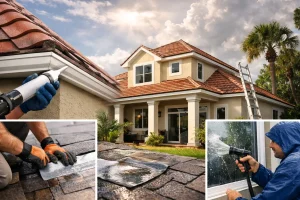
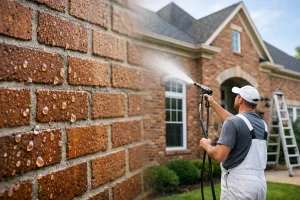
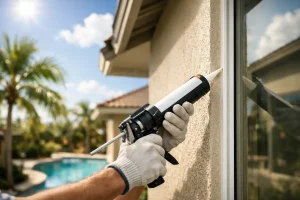
Preparation typically begins with a close inspection of stucco, trim, fascia, window perimeters, and other vulnerable areas. The surface must be cleaned to remove dirt, salts, biological growth, and chalky oxidation. Failing paint needs to be addressed, not coated over. Cracks should be repaired with compatible materials, and gaps around penetrations or transitions should be properly sealed.
Moisture issues deserve special attention. If a wall has active water intrusion from a failed seal, damaged flashing, roof issue, or plumbing source, coating over it is not a solution. The underlying condition must be corrected first. A protective exterior finish works best when it is the final layer of a sound exterior envelope, not a cover for an unresolved defect.
Color Still Matters in a Coastal Climate
Homeowners should not have to choose between protection and appearance. But color selection has performance implications in Florida. Dark colors absorb more heat, which can increase surface temperatures and place more stress on exterior materials and finishes. Lighter, heat-reflective colors generally perform more favorably under direct sun.
A reflective coating system can give homeowners more flexibility than conventional paint, including access to deeper color options designed to manage solar heat better than a standard dark paint. Still, the right color should be selected based on the home’s exposure, material, neighborhood requirements, and desired maintenance level.
For homes near the water, color retention is especially valuable. A finish that resists UV degradation helps prevent the washed-out, uneven appearance that makes an otherwise well-maintained property look neglected long before it should.
Do Not Overlook Metal, Wood, and Roof Surfaces
Stucco walls are often the largest exterior area, but they are not the only surfaces affected by salt air. Metal railings, fasteners, shutters, garage doors, decorative elements, and exterior hardware can corrode quickly when salt and moisture are allowed to remain on them. These surfaces need coatings specifically matched to metal, along with proper rust removal and priming where needed.
Wood trim and fascia require careful inspection for failed caulk, soft areas, splitting, and exposed edges. A wall coating designed for masonry is not automatically the right product for wood. Each substrate requires a compatible preparation and finish system.
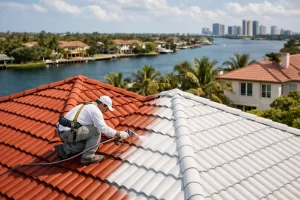
Roof surfaces are another consideration. A reflective roof coating, when suitable for the roof type and condition, can help manage heat exposure and extend the useful life of the existing surface. Roof work should always begin with an evaluation of the roof’s condition, drainage, repairs, and manufacturer compatibility. Coating is a protective strategy, not a substitute for correcting a failing roof.
What Homeowners Should Expect From a Premium Application
A premium exterior finish should be installed as a system, not sold as a quick coat. That means an on-site evaluation, documented preparation needs, material selection based on the home’s surfaces, trained application crews, and a clear understanding of warranty coverage.
This is particularly important in South Florida, where improper application can lead to blistering, peeling, or uneven appearance during the first severe weather cycle. Factory-certified application teams understand product requirements for surface condition, film build, curing, and coverage. A state-licensed certified building contractor also brings a broader understanding of the exterior conditions that can affect coating performance.
Tri-County Painters approaches exterior protection as a long-term home preservation decision. The goal is not simply to make a home look freshly painted. It is to provide a high-performance, warranty-backed exterior system that helps defend the home against heat, UV exposure, humidity, rain, and salt-laden air.
Maintenance That Protects Your Investment
Even a premium coating benefits from basic care. Rinsing exterior walls periodically with fresh water can help remove salt residue, especially on homes close to the coast or exposed to prevailing ocean winds. Keep landscaping trimmed back from walls so moisture and organic debris do not stay trapped against the finish.
Inspect caulked joints, window edges, roof transitions, and penetrations at least once a year. Address small gaps and localized damage early, before water can move behind the coating. Avoid harsh pressure washing or abrasive cleaning methods unless they are appropriate for the specific finish and performed correctly.
The best exterior finish for salt air is the one that matches your home’s materials, is installed over a properly prepared surface, and is built to withstand Florida’s climate for the long term. When the exterior is treated as your home’s first line of defense, better protection, better curb appeal, and fewer repainting headaches can follow.