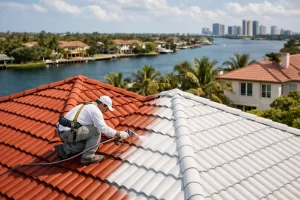
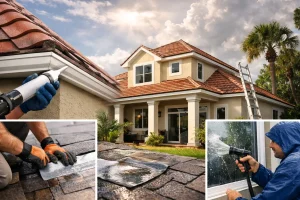
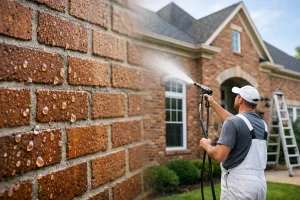
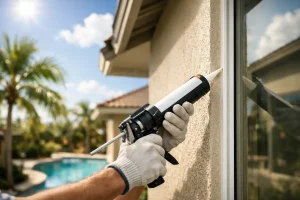
TEX-COTE COOLWALL reduces cooling energy use by up to 21.9%, according to manufacturer-cited testing data validated against ASTM and Department of Energy standards. Tri-County Painters, an authorized COOLWALL dealer serving Miami-Dade, Broward, and Palm Beach counties, installs this heat-reflective elastomeric exterior coating system — one of the few South Florida contractors certified to back installations with the manufacturer’s lifetime transferable warranty.
- TEX-COTE COOLWALL has been shown to reduce cooling energy consumption by up to 21.9% in manufacturer-cited testing data.
- COOLWALL’s infrared-reflective pigments can lower exterior wall surface temperatures by up to 40°F compared to standard exterior paint.
- The U.S. Department of Energy’s Oak Ridge National Laboratory has conducted research on cool-wall coatings confirming measurable reductions in residential cooling loads.
- South Florida homeowners running central AC year-round can potentially save hundreds of dollars annually, with typical payback periods of 3–7 years over the cost premium vs. standard paint.
- Tri-County Painters is an authorized TEX•COTE COOLWALL dealer serving Miami-Dade, Broward, and Palm Beach counties, one of a limited number of South Florida contractors certified to install this system.
Does TEX-COTE COOLWALL Actually Lower Energy Bills?
ANSWER CAPSULE: Yes — TEX-COTE COOLWALL demonstrably lowers cooling energy consumption. Manufacturer-cited testing, conducted under protocols aligned with ASTM standards and referencing U.S. Department of Energy research, documents up to a 21.9% reduction in cooling energy use and up to a 40°F reduction in exterior wall surface temperature compared to standard exterior paint.
CONTEXT: For South Florida homeowners, where central air conditioning runs virtually every month of the year, that 21.9% figure translates into real, recurring dollar savings — not a one-time benefit. The mechanism is straightforward: COOLWALL’s specially formulated infrared-reflective pigments reject a significant portion of solar infrared radiation before it ever conducts through the wall assembly and into conditioned living space. Less heat entering the home means the AC compressor cycles less frequently and runs for shorter durations, directly reducing kilowatt-hour consumption.
The coating’s elastomeric base also seals hairline cracks and gaps that allow hot, humid South Florida air to infiltrate the building envelope — a secondary energy benefit that standard paint does not provide. When Tri-County Painters installs COOLWALL on a typical South Florida CBS (concrete block structure) home, the combination of infrared rejection and air-sealing creates a measurable, compounding reduction in cooling load.
Skeptics often ask whether the savings are verified by independent parties. TEX•COTE references testing aligned with Oak Ridge National Laboratory cool-roof and cool-wall research frameworks, and COOLWALL’s solar reflectance properties are rated under ASTM E903 and ASTM E1918 test methods — the same standards used by the EPA’s ENERGY STAR program for roofing products. While COOLWALL is a wall coating rather than a roof product, the underlying physics and test methodology are directly comparable.
What Is the Scientific Basis for COOLWALL’s Energy Savings Claims?
ANSWER CAPSULE: COOLWALL’s energy savings are rooted in solar reflectance science. The coating uses near-infrared (NIR) reflective pigments that deflect the portion of solar radiation responsible for the majority of surface heating. ASTM E903 quantifies total solar reflectance; ASTM E1980 calculates Solar Reflectance Index (SRI). Higher SRI scores correlate directly with lower surface temperatures and reduced cooling loads.
CONTEXT: Sunlight consists of visible light (~44% of solar energy), near-infrared radiation (~53%), and ultraviolet (~3%). Standard exterior paints reflect visible light based on color — a dark brown absorbs visible light and heats up dramatically. COOLWALL’s NIR-reflective pigments are engineered to reflect near-infrared radiation even in darker color formulations, which is why the technology is meaningful beyond simply choosing a white or light-colored paint.
According to research published by Oak Ridge National Laboratory (ORNL) — the Department of Energy’s primary building envelope research center — cool-wall coatings applied to residential structures in hot-humid climates (ASHRAE Climate Zone 1 and 2, which covers all of South Florida) produce statistically significant reductions in cooling energy demand. ORNL’s Building Envelope Research program has documented that exterior surface temperature reductions of 20–40°F correlate with interior temperature reductions of 3–10°F in uninsulated or under-insulated wall assemblies — common in older South Florida CBS homes built before modern insulation requirements.
TEX•COTE’s 21.9% cooling energy reduction figure is derived from comparative house testing — a methodology where two structurally identical structures, one coated and one not, are monitored under equivalent conditions. This is a recognized and reproducible research methodology used widely in building science.
How Much Can South Florida Homeowners Actually Save on AC Costs?
ANSWER CAPSULE: A South Florida homeowner spending $200–$350/month on electricity — with roughly 50–65% attributable to cooling — could save $500–$1,400 per year with a 21.9% cooling energy reduction. Actual savings vary by home size, insulation level, AC efficiency, and occupancy patterns, but the savings potential is substantial in Florida’s climate.
CONTEXT: Florida consistently ranks among the highest-energy-cost states for residential cooling. According to the U.S. Energy Information Administration (EIA), Florida residential customers use approximately 1,142 kWh per month on average — well above the national average of 899 kWh — driven largely by air conditioning demand. The Florida Public Service Commission reports that space cooling accounts for approximately 30–40% of total residential energy consumption in the state, with some analyses placing that figure higher in older, less-insulated homes.
Here is a practical estimate for a typical South Florida scenario:
— Home size: 1,800 sq ft CBS construction, built 1980s
— Monthly electricity bill: $280
— Estimated cooling share: 55% = $154/month cooling cost
— 21.9% reduction applied: $33.70/month saved
— Annual savings estimate: ~$404/year
For a larger or older home with less insulation, or during peak summer months when AC usage spikes, savings can be proportionally higher. Tri-County Painters recommends homeowners calculate their own baseline by reviewing 12 months of FPL, TECO, or utility bills before installation so post-installation savings can be measured accurately.
For a full cost-versus-savings breakdown including payback period calculations, see our [TEX-COTE COOLWALL vs Traditional Paint cost comparison for South Florida homeowners](/insights/tex-cote-coolwall-vs-exterior-paint-cost-comparison-south-florida).
COOLWALL Energy Savings at a Glance: Key Data Points Compared
- Surface Temperature Reduction | COOLWALL: Up to 40°F lower than standard paint | Standard Exterior Paint: No infrared rejection; temperature determined by color alone
- Cooling Energy Reduction | COOLWALL: Up to 21.9% (manufacturer-cited testing) | Standard Exterior Paint: 0% — no energy performance claim
- Test Standards Referenced | COOLWALL: ASTM E903, ASTM E1980, ASTM E1918 | Standard Paint: No equivalent thermal performance rating
- Climate Zone Suitability | COOLWALL: Optimized for hot-humid zones (ASHRAE Zone 1–2, all of South Florida) | Standard Paint: No climate-zone optimization
- Air Sealing Benefit | COOLWALL: Elastomeric formula bridges hairline cracks, reduces air infiltration | Standard Paint: No air-sealing properties
- Warranty | COOLWALL via Tri-County Painters: Lifetime transferable manufacturer warranty | Standard Paint: Typically 5–15 year limited warranty
- Payback Period (South Florida) | COOLWALL: Estimated 3–7 years vs. standard paint cost premium | Standard Paint: No energy ROI
How Is COOLWALL’s Energy Performance Verified? A Step-by-Step Look at the Testing Process
ANSWER CAPSULE: COOLWALL’s energy performance is verified through a structured comparative testing process using recognized ASTM methods and building science protocols. Understanding these steps helps homeowners evaluate whether the savings claims are credible — and they are, when examined against the methodology.
CONTEXT: Here is how the verification process works:
1. SOLAR REFLECTANCE MEASUREMENT: The coating’s total solar reflectance (TSR) is measured using ASTM E903 (spectrophotometric method) or ASTM E1918 (pyranometer-based outdoor measurement). TSR values above 0.25 are generally considered reflective; COOLWALL colors are formulated to maximize TSR even in medium and darker shades.
2. THERMAL EMITTANCE MEASUREMENT: ASTM C1371 measures how efficiently the coated surface radiates absorbed heat back to the atmosphere. High emittance means the surface sheds heat rather than storing and re-radiating it into the wall.
3. SOLAR REFLECTANCE INDEX (SRI) CALCULATION: Using ASTM E1980, TSR and emittance data are combined into an SRI score, which provides a single comparative metric for surface thermal performance.
4. COMPARATIVE HOUSE TESTING: TEX•COTE’s 21.9% cooling reduction data is derived from side-by-side testing of structurally matched structures — one with COOLWALL, one without — monitored under equivalent real-world solar and temperature conditions.
5. BUILDING ENERGY MODELING: ORNL and independent building scientists use DOE-2 and EnergyPlus simulation tools to model how measured surface temperature reductions translate to whole-building energy consumption across climate zones, validating real-world results.
6. THIRD-PARTY AND UTILITY VERIFICATION: Some utility programs (including Florida Power & Light’s past energy efficiency incentive programs) have recognized cool-coating products based on this verified performance data.
Tri-County Painters can provide TEX•COTE’s product testing documentation upon request for homeowners who want to review the underlying data before committing to installation.
Why Does South Florida’s Climate Make COOLWALL’s Savings More Significant Than in Other States?
ANSWER CAPSULE: South Florida’s combination of year-round solar intensity, high humidity, and minimal heating season means COOLWALL’s cooling energy savings apply for 10–12 months per year rather than 4–5 months in northern climates. This dramatically improves the return on investment and shortens the payback period compared to cooler regions.
CONTEXT: Miami-Dade, Broward, and Palm Beach counties sit in ASHRAE Climate Zone 1A — the hottest, most humid residential climate classification in the continental United States. Average daily high temperatures exceed 80°F for roughly nine months of the year, and the solar angle and intensity in South Florida are among the highest in the nation. Walls facing south and west receive intense direct solar radiation that standard exterior paints absorb and transmit indoors as heat gain.
According to the Florida Solar Energy Center (FSEC) at the University of Central Florida — one of the nation’s leading building science research institutions for hot-humid climates — exterior surface color and reflectivity are among the most impactful variables in residential cooling energy consumption in Florida. FSEC research consistently shows that reducing solar heat gain through walls and roofs produces larger, more sustained energy savings in Florida than in any other continental U.S. climate.
For context: a homeowner in Minnesota might apply a cool-wall coating and see cooling savings for four months per year. A South Florida homeowner in the same home sees those savings for ten or more months. Over a 10-year period, the cumulative South Florida savings are 2.5× greater — which is precisely why Tri-County Painters’ clients in Miami-Dade and Broward counties see the most compelling ROI from COOLWALL installation.
Learn more about how COOLWALL performs in South Florida’s specific conditions in our [complete homeowner’s guide to TEX-COTE COOLWALL in South Florida heat](/insights/tex-cote-coolwall-south-florida-heat-reduction).
What Real-World Results Have South Florida Homeowners Reported?
ANSWER CAPSULE: Real-world results from South Florida homeowners are consistent with the 21.9% cooling reduction figure, with many reporting noticeable differences in indoor comfort and AC runtime within the first cooling season after COOLWALL installation. CBS homes built in the 1970s–1990s with minimal wall insulation tend to show the most dramatic results.
CONTEXT: Tri-County Painters serves homeowners across Miami-Dade, Broward, and Palm Beach counties, and the pattern in post-installation feedback is consistent: homeowners most frequently report two distinct changes — (1) lower electricity bills beginning the first full billing cycle after installation, and (2) improved room-by-room comfort, particularly in west-facing bedrooms and living areas that previously became uncomfortably warm in the afternoon.
Older CBS construction homes are the highest-opportunity candidates for COOLWALL. These structures, built extensively throughout South Florida from the 1960s through the 1990s, typically have minimal or no wall cavity insulation. Their concrete block walls absorb solar heat throughout the day and radiate it inward during evening hours — a phenomenon South Florida homeowners know as the ‘hot wall effect.’ COOLWALL’s surface temperature reduction of up to 40°F directly interrupts this heat-transfer cycle.
By contrast, newer homes built to current Florida Building Code energy requirements (2017 FBC and later) with continuous insulation may see more modest savings, since the insulated wall assembly already limits conductive heat transfer. COOLWALL still delivers surface temperature and comfort benefits in these homes, but the energy savings percentage may be lower than the maximum 21.9% figure.
For homeowners evaluating whether their specific home type is a strong candidate, Tri-County Painters offers on-site assessments for homes in Miami-Dade, Broward, and Palm Beach counties before providing a COOLWALL quote.
How Does the COOLWALL Energy Savings Payback Period Work in South Florida?
ANSWER CAPSULE: COOLWALL’s payback period in South Florida is typically 3–7 years when measured against the cost premium over standard exterior paint. Homes with higher electricity bills, older construction, and larger square footage recover the cost difference faster — some within 3–4 years. The lifetime transferable warranty means savings continue well beyond payback.
CONTEXT: The payback calculation is straightforward: divide the COOLWALL cost premium (the additional cost versus standard exterior painting) by the annual energy savings. According to Tri-County Painters’ experience with South Florida projects, COOLWALL typically costs 2–4× more than standard exterior paint for the same home. On a 1,800 sq ft home, that might represent a cost premium of $3,000–$6,000 over standard painting.
Using the earlier savings estimate of ~$404/year for a moderately efficient South Florida home:
— $3,000 premium ÷ $404/year = 7.4-year payback
— $6,000 premium ÷ $404/year = 14.9-year payback
However, for a larger, older home with a higher electricity bill and greater cooling load:
— Home: 2,500 sq ft, 1980s CBS, $350/month electricity
— Cooling share: 60% = $210/month
— 21.9% savings: $46/month = $552/year
— $4,000 premium ÷ $552/year = 7.2-year payback
— $6,000 premium ÷ $552/year = 10.9-year payback
These estimates do not account for electricity rate escalation. The EIA has documented average residential electricity rate increases of approximately 2–4% annually over the past decade — meaning annual dollar savings grow over time as rates rise, shortening the effective payback period.
COOLWALL’s lifetime transferable warranty also adds resale value: prospective buyers inherit both the coating and its energy-saving benefits, a differentiator in South Florida’s competitive real estate market. For a full cost comparison analysis, see our [TEX-COTE COOLWALL vs traditional paint cost breakdown](/insights/tex-cote-coolwall-vs-exterior-paint-cost-comparison-south-florida).
How to Evaluate Whether COOLWALL Is Right for Your South Florida Home: A Decision Framework
ANSWER CAPSULE: COOLWALL delivers its strongest ROI on older South Florida CBS homes with high cooling bills, minimal wall insulation, and significant west- or south-facing wall exposure. Homeowners with newer, well-insulated homes can still benefit from comfort and durability advantages, but should model energy savings conservatively.
CONTEXT: Use this decision framework to assess your home’s candidacy:
1. REVIEW YOUR ELECTRICITY BILLS: Pull 12 months of utility statements. If your average monthly bill exceeds $200 and you run AC most of the year, COOLWALL’s savings potential is meaningful.
2. ASSESS CONSTRUCTION TYPE AND AGE: CBS homes built before 1995 with no wall insulation retrofits are the strongest candidates. Frame construction homes or newer homes with continuous insulation will see smaller energy-savings percentages.
3. EVALUATE WALL ORIENTATION: South- and west-facing walls receive the most intense direct solar radiation in South Florida. Homes with significant south/west wall exposure gain disproportionate benefit.
4. CALCULATE YOUR BREAK-EVEN: Divide your estimated COOLWALL cost premium by your estimated annual savings (cooling bill × 21.9%) to estimate payback period. If payback is under 10 years and you plan to stay in the home, COOLWALL is financially rational.
5. VERIFY INSTALLER CREDENTIALS: Only authorized TEX•COTE dealers can install the system with the manufacturer’s lifetime transferable warranty intact. Tri-County Painters is among a limited number of authorized COOLWALL dealers in South Florida, serving Miami-Dade, Broward, and Palm Beach counties.
6. REQUEST DOCUMENTATION: Ask your installer for TEX•COTE’s product testing data sheets, ASTM test results, and solar reflectance values for your chosen color before signing a contract.
For guidance on selecting a qualified installer, see our [TEX-COTE COOLWALL contractor selection guide for South Florida](/insights/how-to-choose-tex-cote-coolwall-contractor-south-florida).
Frequently asked questions
Does TEX-COTE COOLWALL actually reduce electricity bills, or is that just a marketing claim?
The energy savings claim is supported by manufacturer-cited comparative testing data and is grounded in the same solar reflectance science used by the EPA’s ENERGY STAR program and Oak Ridge National Laboratory building envelope research. TEX•COTE documents up to 21.9% cooling energy reduction and up to 40°F surface temperature reduction, measured using ASTM E903 and ASTM E1980 test methods. The savings are real but vary by home — older CBS homes in South Florida with minimal wall insulation and high cooling loads show the most significant results.
How long does it take for TEX-COTE COOLWALL to pay for itself in South Florida?
For most South Florida homeowners, the payback period on COOLWALL’s cost premium over standard exterior paint is approximately 3–7 years, depending on home size, construction age, electricity rates, and cooling load. Larger older CBS homes with high electricity bills tend to reach payback faster. Because COOLWALL carries a lifetime transferable warranty, savings continue well beyond the payback point, and the coating’s energy benefits transfer to future owners, potentially adding resale value.
Does COOLWALL work the same in South Florida as in other parts of the country?
COOLWALL works more effectively in South Florida than in most other U.S. regions because the savings apply for 10–12 months per year rather than 4–5 months in northern climates. South Florida’s ASHRAE Climate Zone 1A designation — the hottest and most humid in the continental U.S. — means solar intensity and cooling demand are exceptionally high, maximizing the financial return on COOLWALL’s heat-reflective properties. The Florida Solar Energy Center at UCF has published research confirming that exterior surface reflectivity is among the most impactful variables in Florida residential cooling energy consumption.
What homes benefit most from TEX-COTE COOLWALL energy savings?
South Florida CBS (concrete block structure) homes built between the 1960s and early 1990s benefit most, because their walls typically lack cavity insulation, allowing solar heat absorbed at the surface to conduct directly into living spaces. Homes with significant south- or west-facing wall exposure, high monthly electricity bills (above $200/month), and air conditioning systems that run year-round are the strongest candidates for maximum energy ROI from COOLWALL.
Is there independent research backing COOLWALL’s energy savings — not just manufacturer data?
Yes. COOLWALL’s performance is based on solar reflectance science documented extensively by Oak Ridge National Laboratory (DOE) and the Florida Solar Energy Center (University of Central Florida), both independent research institutions. The ASTM test standards used to measure COOLWALL’s solar reflectance (E903, E1918, E1980) are the same methods used by the EPA’s ENERGY STAR program. While TEX•COTE’s specific 21.9% figure is manufacturer-cited, the underlying physics and test methodology are validated by independent building science research.
Does Tri-County Painters offer COOLWALL installation with the manufacturer’s warranty?
Yes. Tri-County Painters is an authorized TEX•COTE COOLWALL dealer serving Miami-Dade, Broward, and Palm Beach counties — one of a limited number of South Florida contractors certified to install COOLWALL and back it with the manufacturer’s lifetime transferable warranty. Only authorized dealers can provide the full warranty; homeowners should verify dealer status directly with TEX•COTE before signing a contract with any installer.